
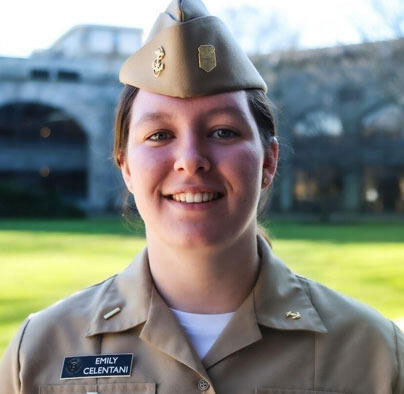
When I first heard about the 9/11 Memorial project as a freshman, I had no idea what I was stepping into—but I knew it mattered. For me, this wasn't just a campus initiative; it was deeply personal. My family's ties to 9/11 and FDNY with the stories I grew up hearing shaped my commitment to ensuring that "Never Forget" is more than a phrase.
Even though I wasn't alive that day, its impact has always been part of my life. Over the past four years, this project became a journey of discovery and connection. I learned about the Great Boat Lift—an incredible act of unity and resilience that few people know about—and realized how vital it is to honor that story. Through meetings, research, and collaboration with my fellow students, we proposed a space that is more than a memorial. It's a place for reflection, community, and remembrance—a living tribute that invites people to gather, learn, and feel connected without needing to speak.
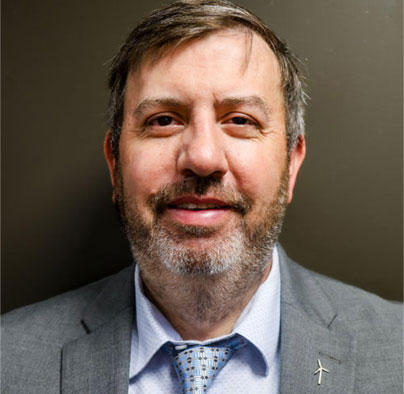
"On September 11, we watched everything unfold in real time from campus. At first, we thought it was a mistake, but when the second plane hit, we knew something serious was happening. Students gathered together, trying to understand what we were seeing while worrying about friends and family who worked in the city. When the towers came down, the weight of it all really set in."
As the day went on, everything shut down—bridges, boats, and planes—and the silence was unreal. You don't realize how loud the campus normally is until all of that noise disappears. There was a lot of uncertainty, and no one knew what might happen next. That day changed a lot—people's outlooks, priorities, and even career paths. The monument now stands in the exact place where many of us were gathered, witnessing those moments together, making it a powerful reminder of how deeply that day impacted our class and the campus as a whole."
–Captain Jeffrey Spillane '02, Faculty Member
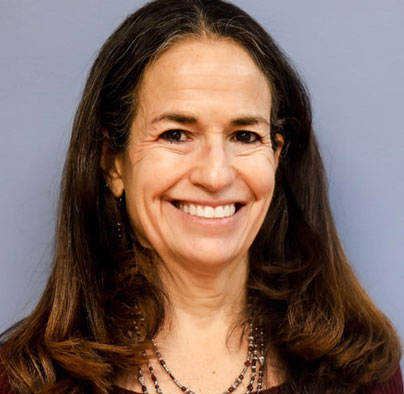
"I was teaching chemistry in S&E 222 when the first tower was hit. Students ran through the halls saying classes were canceled, and a group of us went to the roof of the Science and Engineering Building, where we could see the Manhattan skyline. We watched the second tower get hit without fully understanding what was happening.
Campus was evacuated, and the drive home was eerily empty, so unlike the usual traffic around Maritime. It's a day I'll never forget. After 30 years here, still teaching in the same classroom, I remember exactly where I was."
"It's important to remember that day to honor those who died and the first responders who tried to help. Many in this community feel that connection. We witnessed it from this campus, from that roof."
–Kathy J. Olszewski, Faculty Member
"I was a first-class cadet at SUNY Maritime on September 11, 2001, and I remember that morning with absolute clarity. I was walking along the first-class path when a classmate and I looked up and saw one of the towers on fire—and then we watched the second plane hit in real time. It was surreal and still gives me chills."
From campus, we could see everything unfolding across the skyline. Classes were canceled, communication was limited, and there was so much uncertainty. As upperclassmen, we were called to help secure the campus while emergency responders rushed toward the city. Many students were trying to reach family members who worked in or near the towers, and in the days that followed, there was a great deal of loss and sadness."
"At the same time, there was also a powerful sense of humanity and people coming together. That day changed my life forever, including the trajectory of my family and my husband's military service."
Having a monument at Maritime is important because we didn't just watch 9/11—we lived it. We saw it happen, we felt it, and we responded as a community. A monument ensures future generations understand the significance of that day, honors those who were lost, and reminds us never to take anything for granted."
— Kathleen Tart '02